America
The Captain and Ann BarbaraAmerica is the promised land of Mary Antin's memoir, the destination that transforms the Antin family's fate and the crucible in which the narrator is remade. The book's very title, The Promised Land, frames the United States not merely as a country but as the fulfillment of a biblical promise, the answer to the centuries of Jewish suffering in the Pale of Settlement. For Mary, America is the place where she is "born" a second time, where the boundaries of her world burst and the arch of heaven soars, and where she evolves from a timid immigrant child into a confident American citizen and writer. The nation is the fixed point around which the entire narrative revolves, the westward goal that gives shape to the family's struggles and the stage on which Mary's intellectual and spiritual awakening unfolds.
The Exodus from the Pale
The decision to emigrate to America is born of desperation and hope in equal measure. After years of illness, business failure, and the slow erosion of the family's fortunes in Polotzk, Mary's father, Joseph Antin, makes a great resolve to begin life all over again on a new soil. The immediate catalyst is the expulsion of Jews from Moscow and its surrounding district, a periodic anti-Semitic movement that sends hundreds of fugitives fleeing into the open districts, crowding the cities and diminishing every man's chance of making a living. The disaster spreads "ring beyond ring, from the stone thrown by a despotic official into the ever-full river of Jewish persecution." Passover is celebrated in tears that year, and at the end of the long service, the traditional hope is transformed: instead of "May we be next year in Jerusalem," the people say, "Next year—in America!" This substitution marks America as the new Jerusalem, the promised land of the modern Exodus. The father is carried away by the westward movement, traveling with borrowed money to a German port, whence he is forwarded to Boston at the expense of an emigrant aid society, leaving his family behind until he can send for them.
The family's eventual summons to America is a moment of ecstatic release. When the steamer ticket arrives, the household erupts in celebration: Mary's mother does not go out with her basket, her brother stays out of heder, and her sister salts the soup three times. For Mary, the news is overwhelming: "The boundaries burst. The arch of heaven soared. A million suns shone out for every star. The winds rushed in from outer space, roaring in my ears, 'America! America!'". The journey itself is a miracle as great as any wrought by the rod of Moses, with the wanderers riding the bitter flood of the Atlantic toward their deliverance.
The New World and Its Contrasts
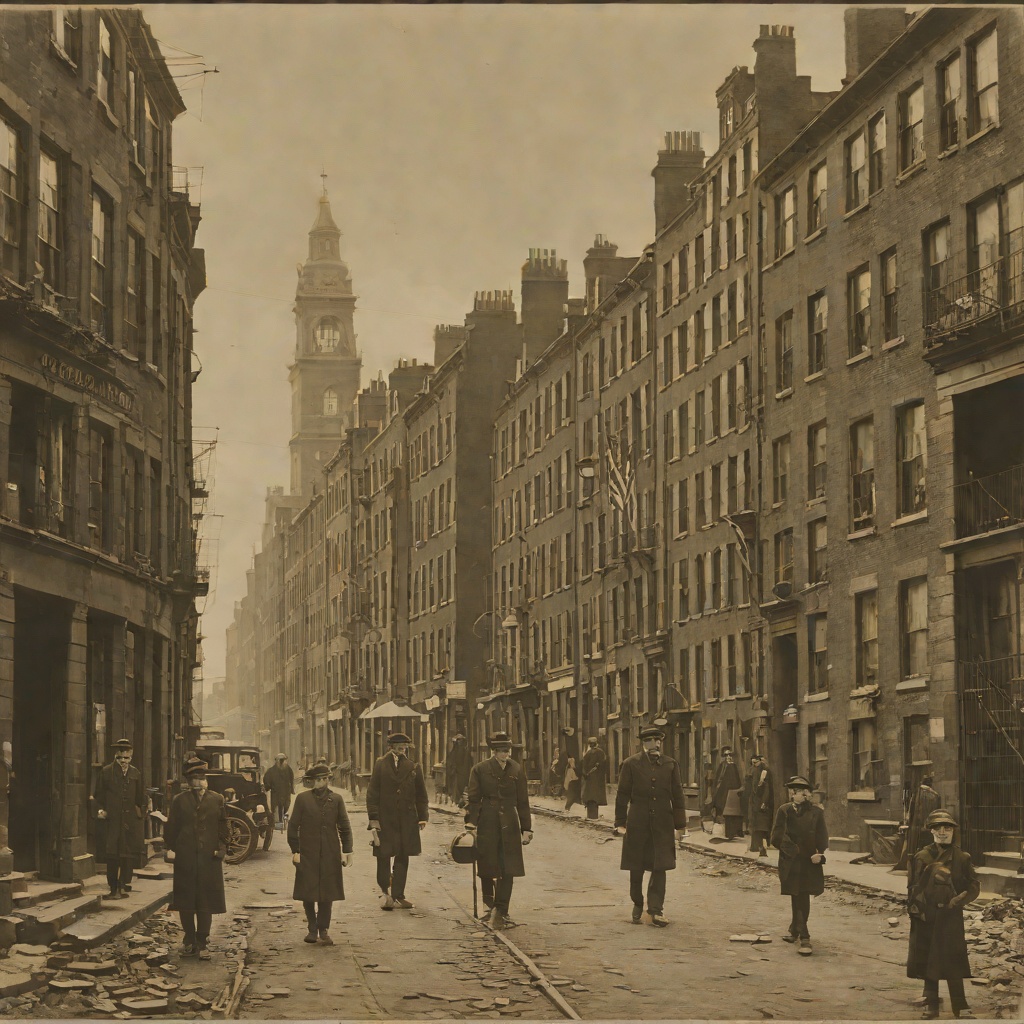
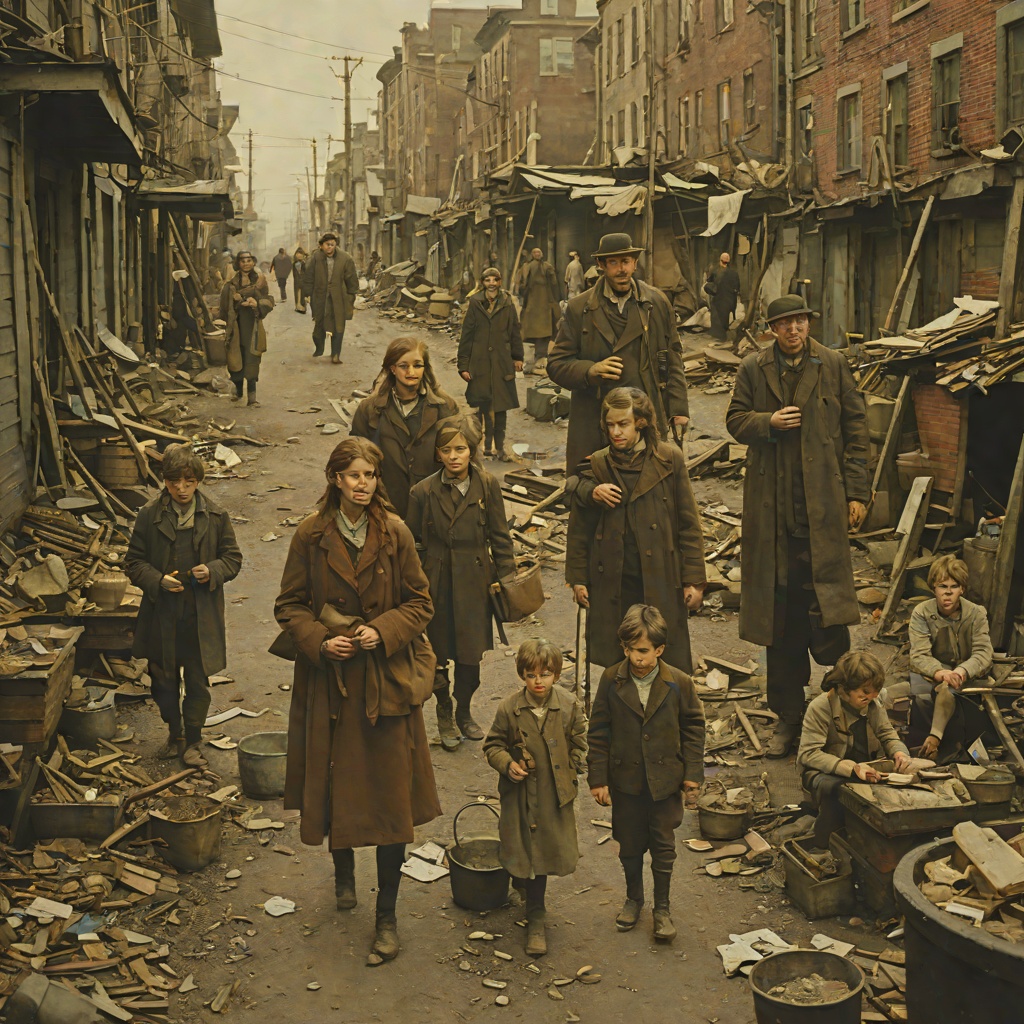
America's first impression on the young immigrant is one of dizzying scale and promise. The family's new home on Union Place, off Wall Street in the West End of Boston, is a short box of an alley lined with two rows of three-story tenements, a stingy strip of sky for a lid, and a littered pavement for a floor. Yet Mary sees a very different picture: two imposing rows of brick buildings, loftier than any dwelling she had ever lived in, with brick underfoot instead of common earth or boards, and friendly windows filled with the uncovered heads of women and children. The contrast with their former affluence in Russia—the upholstered parlors, embroidered linen, silver spoons, and goblets of gold—is stark, but the family is impressed with their new home, chiefly because they have just passed through their seven lean years. America's promise is not material comfort but the dignity of a new identity: on arrival, Mary finds that her father is "Mr. Antin" on the slightest provocation, and she herself is "Mary Antin," a dignified title that makes her feel very important. It is just like America that even plain people should wear their surnames on weekdays.
The family's first American summer is spent at Crescent Beach, a life-size strip of sand curving from Winthrop to Lynn, now famous as Revere Beach. When the reunited Antins make their stand there, there are no boulevards, no stately bath-houses, no hotels, no gaudy amusement places—only the bright clean sweep of sand, the summer sea, and the summer sky. For Mary, who had spent her life inland believing the Dvina was the great water of the world, the sea is a revelation. She lies stretched out in the sun, her eyes level with the sea, till she seems absorbed bodily by the materials of the world around her; she crouches on the beach at full moon, wondering between the two splendors of sky and sea; she runs out to meet the incoming storm, her face full in the wind, clinging to a stake or upturned boat, deliciously frightened by the roar and rumble of the waves. This idle summer by the sea is her growing time, and she grows all the faster because she had been so cramped before. The experience of a change of country has made her more than commonly alive to impressions, which are the seeds of ideas.
The Palace of Learning and the Natural World
America's greatest gift to Mary is not its landscape but its institutions, above all the public library. She calls it her palace, hers because she is a citizen, hers though she was born an alien, hers though she lives on Dover Street. She loves to lean against a pillar in the entrance hall, watching the people go in and out—groups of children hushing their chatter at the entrance, spectacled scholars coming slowly down the stairs loaded with books, visitors from out of town studying the inscriptions on the marble floor. The carved inscriptions—"Public Library—Built by the People—Free to All"—are a testament to the American ideal of democratic access to knowledge. Mary visits every part of the building open to the public, spending rapt hours studying the Abbey pictures, repeating lines from Tennyson's poem before the glowing scenes of the Holy Grail, and standing mute before the "Prophets" in the gallery above, where echoes of the Hebrew Psalms she had long forgotten throb somewhere in the depths of her consciousness. The library is the tangible proof that she belongs, that she has a right to be there, that she is at home there.
America also awakens Mary to the natural world, a transformation she describes as the second great transformation of her life, as truly as her coming to America was the first. Before this, nature study had left her cold; she brought the grasses and cereals her teacher ordered but was content when the arithmetic lesson began. The turning point comes at a lecture on spiders at Hale House, where Mr. Emerson weaves a gigantic spider's web across the doorway with a ball of twine. Mary, who had dreaded the horrid creatures, is fascinated by the progress of the web and surprised to hear how much there is to know about a dusty little spider. The drama of the spider's daily life—his struggle for existence, his wars with his enemies, his wiles, his traps, his patient labors—fills her with wonder and leaves no room for repugnance or fear. She begins to study the spider webs in the corners of the ceiling, suffering one or two webs of more than ordinary perfection to remain undisturbed for weeks, and even places a crust for the mice on the threshold of her room, cultivating a breathless intimacy with them. The Natural History Club's excursion to Nahant completes her conversion, as the club spends the day studying marine life in the tide pools, scrambling up and down the cliffs to secure starfish, limpets, and sea-urchins, with a merry luncheon on the rocks and the tide rushing in to steal away their seaweed cushions and drown their transparent pools.
The Meaning of America
America, in Mary Antin's telling, is not a place one merely inhabits but a condition one enters into and is remade by. The memoir's opening declaration—"I was born, I have lived, and I have been made over"—is the key to its vision of America as a force of personal transformation. The nation is the answer to the Goluth, the exile and suffering of the Jewish people, and the fulfillment of the promise that the waters of the Atlantic would part for the wanderers as the Red Sea parted for Moses. Yet America's promise is also demanding: it requires the immigrant to shed the old self and embrace a new identity, to learn English, to become a citizen, to claim the public library as one's own palace. The memoir is thus both a personal story and a national one, a testament to the idea that America is a land where even a little immigrant from Polotzk can find a home, a voice, and a place among the citizens. The book's enduring power lies in its insistence that this transformation is not a loss but a gain, not an erasure but a rebirth—and that the promised land, once reached, must be continually claimed and reimagined.